2026 Best Color Coated Steel Sandwich Panel Suppliers?

2026 Best Color Coated Steel Sandwich Panel Suppliers?

Choosing the 2026 best Color-Coated Steel Sandwich Panel suppliers requires more than comparing online prices. Buyers need verified production records, tested materials, and dependable technical support. A strong supplier should provide clear panel specifications, coating details, fire performance data, and documented quality controls. Factory experience matters.

This guide examines suppliers through practical criteria used on real construction projects. These include core density, steel thickness, coating durability, thermal performance, dimensional accuracy, and delivery consistency. Site conditions also matter. A cold-storage wall may require different insulation than a workshop roof. A panel that performs well in one climate may disappoint elsewhere.

Look beyond polished brochures. Request current test reports, sample panels, reference projects, and warranty terms. Speak with engineers, not only sales representatives. Reliable suppliers explain limitations instead of promising everything. That is a useful signal. Still, supplier rankings are never completely objective. Regional freight costs, changing raw-material prices, and different building standards can alter the final choice. Some manufacturers also publish limited data, making direct comparisons imperfect. This review recognizes those gaps and focuses on evidence that buyers can verify. The goal is not simply to identify the cheapest supplier. It is to find a capable partner delivering consistent Color-Coated Steel Sandwich Panel products, responsive communication, and practical support from design through installation.

2026 Best Color Coated Steel Sandwich Panel Suppliers?

What Are Color Coated Steel Sandwich Panels?

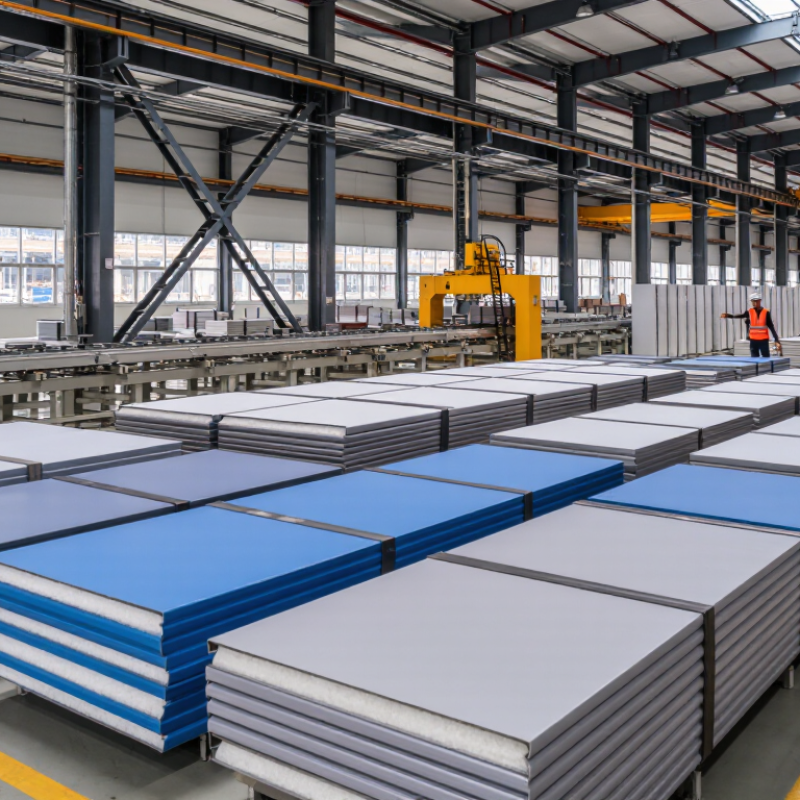
Color-coated steel sandwich panels are factory-made building elements with two profiled steel sheets and an insulated core. The core may use PIR, EPS, or mineral wool. Continuous bonding creates a lightweight composite panel. The outer coating adds color, corrosion resistance, and weather protection. However, “color coated” does not automatically mean long service life. Coating thickness, substrate quality, edge sealing, and installation details matter equally.

The International Energy Agency reports that buildings consume about 30% of global final energy. Therefore, panel insulation performance deserves careful attention. A lower U-value can reduce heat transfer, but laboratory figures may not match site conditions. Joints, fasteners, damaged coatings, and thermal bridges can weaken the result. The 2023 Global Status Report for Buildings and Construction also highlights the sector’s continuing carbon challenge. Mineral wool cores may support stronger fire performance, while PIR and EPS can offer different cost and thermal advantages. Each choice needs project-specific testing.

A reliable supplier should provide declared thermal data, fire classifications, coating specifications, and production quality records. Check tolerances with calipers, not only brochures. Ask for test methods and climatic exposure assumptions. A practical mistake is comparing panel prices without comparing core density or steel thickness. That comparison looks efficient, but it can become expensive during maintenance. The definition is simple. The details are not.

How to Evaluate Sandwich Panel Supplier Capabilities

Choosing a color coated steel sandwich panel supplier starts with capability, not catalog photos. Ask how long the factory has produced insulated panels for similar buildings. Request records from completed warehouses, workshops, cold rooms, or commercial projects. Site visits can reveal practical details, including coil storage, panel cutting, edge protection, and cleanliness. A polished brochure is not evidence.

Evaluate the supplier’s technical control at every stage. Confirm steel thickness, coating type, core density, fire performance, thermal conductivity, and dimensional tolerance. Request recent test reports from independent laboratories, not only internal spreadsheets. Check whether production staff measure panel flatness and joint accuracy during each batch. A two-millimeter gap may look minor, but it can increase air leakage and installation problems. Ask for sample panels and inspect the locking system by hand.

Reliable suppliers communicate clearly when specifications change. They should explain lead times, packaging methods, loading limits, and replacement procedures before signing an order. Ask how they protect panels from moisture during transport and storage. Speak with previous customers about delivery accuracy and technical support after installation. References can be incomplete. That matters. I would also examine a supplier’s weakness, such as limited color matching or occasional schedule delays, rather than expecting perfect performance. Honest limitations usually support better planning. A capable supplier provides drawings, traceable material records, installation guidance, and a realistic response when something goes wrong.

Which Materials and Core Types Should Buyers Compare?

When comparing color coated steel sandwich panel suppliers in 2026, buyers should examine both the facing material and the insulation core. Galvanized steel offers dependable corrosion protection, while aluminum-zinc coated steel can perform better in many exposed environments. Coating mass matters more than a glossy appearance. Check the stated coating weight, paint system, steel thickness, and documented salt-spray or weathering results.

The core changes the panel’s real performance. EPS is economical and lightweight, but it provides weaker fire resistance and may absorb moisture if joints are poorly sealed. PIR or PUR generally offers stronger thermal efficiency with thinner panels, although performance depends on formulation and installation quality. Mineral wool supports higher fire resistance and sound reduction, but it is heavier and can increase structural demands. Keep it practical. A cold-store wall needs different evidence from an agricultural workshop.

On site inspections, I look closely at cut edges, cam-lock joints, fasteners, and visible dents. Small gaps can create condensation problems despite excellent laboratory values. Buyers should request density data, thermal conductivity, fire classifications for the complete assembly, dimensional tolerances, and independent test reports. Supplier reliability also shows in batch traceability and clear installation guidance. A low quoted price may exclude flashings, sealants, transport, or replacement panels. That comparison is often incomplete. Ask how the supplier handles damaged sheets, inconsistent color, and delayed deliveries. The strongest specification can still fail when production control or site support is weak.

2026 Best Color Coated Steel Sandwich Panel Suppliers? - Which Materials and Core Types Should Buyers Compare?
Comparison Area Option / Specification Typical Technical Characteristics Main Advantages Limitations and Buyer Risks Recommended Applications What Buyers Should Verify
Facing Material Pre-painted galvanized steel Steel substrate protected with a zinc coating and a factory-applied organic coating. Common panel thicknesses are approximately 0.40–0.80 mm, depending on design requirements. Good structural strength, corrosion protection, availability, and cost balance. Cut edges, scratches, fastener penetrations, and damaged coatings can become corrosion initiation points. Industrial buildings, warehouses, commercial facilities, roofs, and wall systems. Steel grade, zinc coating mass, coating type, nominal thickness, paint-film thickness, and test certificates.
Facing Material Pre-painted galvalume steel Steel coated with an aluminum-zinc alloy before the organic paint system is applied. The aluminum content improves resistance to atmospheric corrosion and heat reflection. Strong durability in many outdoor environments and good resistance to general atmospheric corrosion. Not automatically suitable for every coastal, chemical, or continuously wet environment; cut-edge treatment remains important. Exterior walls, roofs, agricultural buildings, and light industrial structures. Coating designation, substrate thickness, paint system, environmental exposure classification, and warranty conditions.
Facing Material Stainless steel sheet Corrosion-resistant steel facing used where hygiene, chemical resistance, or frequent cleaning is required. Higher alloy content generally increases material cost. Excellent cleanability, durability, and resistance to many corrosive environments. Higher purchase cost; the selected grade must match the chemical, chloride, and cleaning exposure. Food processing, pharmaceutical, medical, laboratory, and aggressive interior environments. Steel grade, surface finish, weld and joint details, cleaning chemicals, and compatibility with the core and sealants.
Facing Material Aluminum sheet Lightweight metal facing with natural oxide protection. It generally has lower density than steel but lower stiffness at the same thickness. Low weight, good corrosion resistance, and convenient handling. More susceptible to denting and thermal movement; structural design and compatible fasteners are essential. Lightweight partitions, transport-related buildings, coastal applications, and architectural systems. Alloy and temper, sheet thickness, surface finish, thermal expansion allowances, and galvanic corrosion protection.
Core Type Mineral wool Non-combustible fibrous insulation commonly used in fire-rated sandwich panels. Thermal conductivity is often approximately 0.035–0.045 W/m·K, depending on density and test method. Strong fire performance, good acoustic absorption, and suitable for demanding industrial buildings. Heavier than polymeric cores; moisture control, edge sealing, and correct joint installation are important. Factories, logistics buildings, fire-compartment walls, industrial roofs, and acoustic enclosures. Reaction-to-fire and fire-resistance classifications, density, thermal conductivity, water absorption, and tested joint configuration.
Core Type Polyisocyanurate (PIR) Closed-cell rigid foam with low thermal conductivity, commonly around 0.020–0.026 W/m·K for tested products and conditions. High thermal insulation value at relatively low panel thickness and lower weight than mineral wool. Fire performance varies by formulation, thickness, joints, and test assembly; it should not be judged from core material alone. Temperature-controlled buildings, warehouses, commercial facilities, and energy-efficient envelopes. Full-system fire classification, smoke performance, thermal conductivity, dimensional stability, and certification for the intended use.
Core Type Polyurethane (PUR) Closed-cell rigid foam offering good insulation efficiency, with typical thermal conductivity often around 0.022–0.028 W/m·K. Lightweight, efficient insulation, and relatively fast installation. Combustibility and smoke behavior require careful review; performance may change with aging, temperature, and fire exposure. General cold rooms, warehouses, workshops, and insulated wall or roof systems where permitted by local codes. Fire-test reports, foam density, blowing-agent information, thermal aging data, joint design, and local code acceptance.
Core Type Expanded polystyrene (EPS) Lightweight cellular foam with typical thermal conductivity often approximately 0.032–0.040 W/m·K, depending on density and product design. Low cost, low weight, easy handling, and widely available panel configurations. Combustible core; fire, smoke, moisture, and pest-related requirements must be assessed before selection. Budget-sensitive partitions, temporary buildings, agricultural structures, and applications allowed by local regulations. Fire classification, density, moisture resistance, dimensional tolerance, adhesive compatibility, and permitted building use.
Core Type Phenolic foam Rigid closed-cell foam with low thermal conductivity and potentially favorable fire-smoke performance in tested systems. Good insulation efficiency and reduced smoke potential compared with some other polymeric cores. Can be more brittle and costly; compatibility with facings, joints, and installation methods must be confirmed. High-performance envelopes and projects with demanding thermal or smoke-control requirements. Complete fire and smoke test evidence, mechanical strength, moisture behavior, dimensional stability, and installation guidance.
Thermal Performance Panel thickness selection Increasing thickness generally lowers heat transfer, but actual U-value depends on core conductivity, joints, fasteners, facings, and thermal bridges. Supports compliance with energy codes and reduces heating or cooling loads. Nominal thickness alone does not guarantee the stated thermal performance. Cold stores, controlled-temperature rooms, offices, warehouses, and industrial buildings. Declared U-value or thermal resistance, test temperature, aging method, joint correction, and calculation standard.
Fire Performance Tested panel assembly Fire behavior is influenced by the core, facings, adhesive, joint geometry, fasteners, penetrations, and support spacing. Provides a reliable basis for life-safety and compartmentation decisions. A core-only statement or generic “fire resistant” claim is insufficient for project approval. Fire compartments, public buildings, industrial facilities, and high-occupancy projects. Current fire classification, resistance duration, test standard, specimen configuration, field-of-application limits, and certificate validity.
Coating System Polyester coating Common economical coating for general outdoor exposure; durability depends on resin formulation, film thickness, substrate, and environment. Wide color range and cost-effective appearance protection. May have lower color and weathering resistance than higher-performance coating systems. General warehouses, agricultural buildings, interior walls, and moderate exposure conditions. Paint type, nominal dry-film thickness, gloss, color tolerance, UV exposure rating, and warranty exclusions.
Coating System PVDF coating High-performance fluoropolymer coating designed for improved color retention and weathering resistance. Better long-term appearance retention in demanding exterior environments. Higher cost; actual performance depends on resin content, application quality, substrate preparation, and exposure. Architectural facades, prestigious commercial buildings, and high-UV exterior applications. Resin content, coating thickness, color and gloss limits, accelerated-weathering data, and written warranty terms.
Joint and Installation Quality Interlocking joint with seals Panel joints use profiled edges, sealants, gaskets, or combinations of these to control air leakage and water penetration. Improves weather tightness, energy performance, and installation consistency. Incorrect compression, gaps, damaged profiles, and unsuitable sealants can cause leakage and condensation. All external wall and roof panel systems, especially cold or humid environments. Joint detail drawings, sealant type, compression requirements, tolerances, installation tools, and tested air or water performance.
Supplier Evaluation Technical documentation and quality control Reliable suppliers should provide product data sheets, drawings, test reports, certificates, inspection records, and traceable batch information. Reduces specification gaps, approval delays, and inconsistent product quality. Marketing claims without independent or product-specific evidence create procurement and compliance risk. Public tenders, industrial projects, regulated facilities, and multi-location construction programs. Factory quality system, third-party testing, dimensional tolerances, batch traceability, sample approval, delivery inspection, and after-sales support.
Note: Performance ranges are typical indicative values and are not universal product guarantees. Final selection should be based on project climate, fire regulations, structural loads, energy requirements, chemical exposure, installation details, and product-specific test documentation.

What Quality Standards and Certifications Matter in 2026?

In 2026, choosing a color coated steel sandwich panel supplier requires more than comparing prices. Quality should be supported by traceable testing, documented production controls, and practical installation evidence. Look for ISO 9001 certification, but verify its scope and issuing body. A certificate alone does not prove every panel meets project requirements.

For insulated panels, EN 14509 can demonstrate conformity for relevant European applications. Fire performance should be checked through classification reports, such as EN 13501-1, or equivalent local standards. Request test data for thermal conductivity, core density, bond strength, coating durability, and load capacity. Environmental claims need evidence too. ISO 14001 and a product-specific environmental declaration can indicate stronger management, though neither guarantees a low-impact product. Requirements vary by climate and building use.

Tips: Ask for recent third-party reports, factory quality records, coating thickness readings, and batch traceability. Inspect sample edges for uniform bonding and clean cuts. Confirm whether testing covers the exact core, thickness, steel grade, and coating system you will purchase. I have seen impressive certificates paired with weak site documentation. That gap matters. Also review warranty conditions carefully, because exclusions for coastal exposure or poor installation may be significant. A supplier willing to explain limitations is often more reliable than one promising perfect performance.

2026 Best Color Coated Steel Sandwich Panel Suppliers: Standards and Certifications That Matter

The chart shows the publication year of widely relevant standards for evaluating color coated steel sandwich panel suppliers. EN 14509 addresses the performance of insulated metal-faced panels, while ISO 9001, ISO 14001, ISO 45001, and ISO 50001 cover quality, environmental, occupational health and safety, and energy management systems. Edition year is a reference point only; buyers should also verify certificate scope, validity, testing reports, fire classification, thermal performance, and product traceability.

References: European Standard EN 14509:2013; ISO 9001:2015; ISO 14001:2015; ISO 45001:2018; ISO 50001:2018.

How to Select the Best Supplier for Your Project Needs

Choosing a reliable color coated steel sandwich panel supplier in 2026 requires more than comparing prices. Your project’s location, building use, insulation target, and installation method should guide the decision. Start with the panel specification, not the supplier’s sales promise. A cold-storage wall needs different performance from a warehouse partition.

Ask for complete technical documents. These should include core density, steel thickness, coating type, thermal values, fire test results, and dimensional tolerances. Confirm whether independent laboratories verified the reported data. Request coating samples, too. A small color card cannot reveal edge quality, surface adhesion, or scratches after handling. Details matter.

Review the supplier’s production experience through factory records, project references, and quality-control procedures. Check whether each batch has traceable steel and inspection results. I once focused too heavily on a low quotation and overlooked delivery tolerances. That caused extra cutting work on site. The lesson remains uncomfortable.

Compare the full delivered cost, including packaging, transport, unloading, accessories, and replacement panels. Clarify lead times in writing, especially during busy construction seasons. Discuss how damaged panels, specification changes, and delayed drawings will be handled. Communication matters. A dependable supplier answers technical questions clearly and admits limitations. Before signing, order a small sample batch and inspect its fit, finish, and protective packaging under realistic site conditions.