






















UV Board is not one uniform material. The term usually describes a panel finished with ultraviolet-cured coating, while its core may be MDF, particleboard, plywood, or another substrate. That distinction matters. A glossy door panel and a coated plywood sheet can look similar under showroom lights, yet respond differently to moisture, impact, machining, and edge sealing.
Industry forecasts offer useful context, but they require careful interpretation. MarketsandMarkets’ UV Curable Coatings Market report projected growth from USD 6.5 billion in 2023 to USD 10.8 billion by 2028. Those figures cover UV-curable coatings across applications, not UV Board sales alone. They indicate wider interest in fast-curing finishes, but they cannot prove that every UV-finished panel will perform equally well. Product specifications and independent test results still matter.
This guide compares the leading UV Board types expected to attract attention in 2026, including differences in substrate, finish, typical use, and practical limitations. Look beyond the shine. A smooth white cabinet face, a wood-grain decorative panel, and a high-gloss retail fixture may each use UV curing, but their construction and care needs can differ. Check coating thickness, scratch and stain test methods, substrate quality, and whether exposed edges receive proper protection. One point is easy to miss: “UV” describes the curing process, not a universal durability grade.
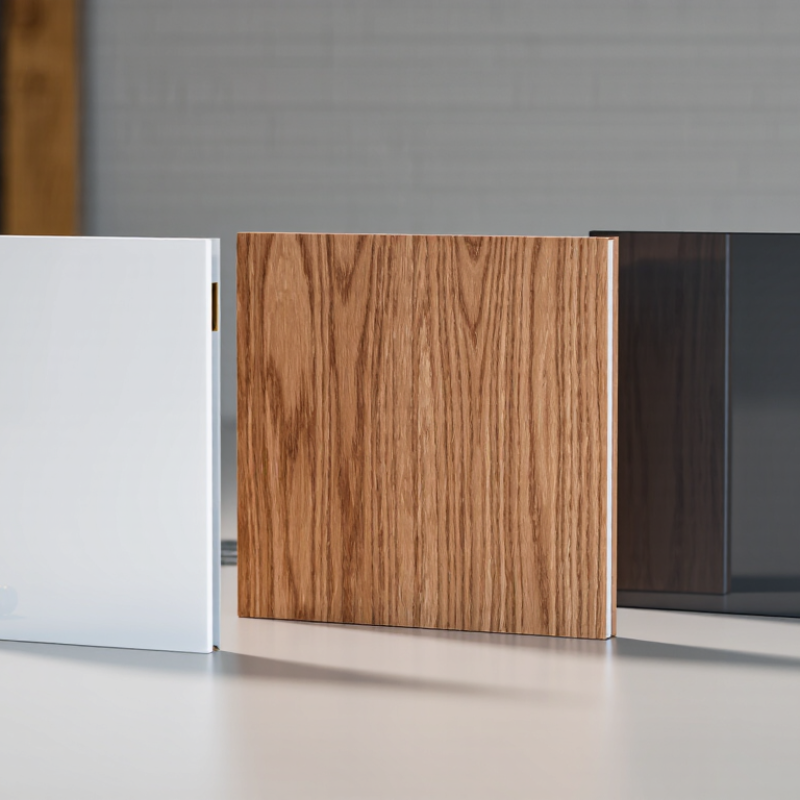
UV boards are panels with a cured coating on one or both faces. Their core may be MDF, plywood, or another stable sheet material. The coating creates a smooth, sealed surface that can show color, gloss, or a printed pattern. It is the layered finish—not the core alone—that gives the board its distinctive appearance. A clean, even base matters.
Making the finish starts with sanding and dust removal. A primer or base layer helps create an even foundation. Decorative color may be applied before a clear, UV-curable coating. The panel then passes under ultraviolet lamps, which harden the coating quickly. Lamp strength, line speed, and coating thickness affect the result. Poorly controlled curing can leave dull patches or a brittle surface. Edges may need separate treatment because the face coating does not automatically protect them. The process sounds precise, but real production still has variables.
Tips: Inspect a sample under bright, angled light. Look for dust specks, uneven gloss, and rough edges. Ask how the panel handles cleaning and light abrasion. A glossy finish can reveal fingerprints easily; it is not always the most practical choice.
| UV Board Type | Typical Core Material | Common Surface Finish | How the UV Finish Is Made | Typical Uses | Key Considerations |
|---|---|---|---|---|---|
| UV-coated MDF board | Medium-density fibreboard made from wood fibres and resin | High gloss, matte, or textured; may be solid-coloured or printed | The prepared panel is sealed and coated, then the coating is cured with ultraviolet light. Multiple coating and curing passes may be used to build the finish. | Cabinet doors, furniture panels, wall cladding, and decorative interiors | Provides a smooth, uniform face. Cut edges and unsealed areas can be vulnerable to moisture, so edge protection is important. |
| UV-coated plywood | Layers of wood veneer bonded together | Clear or coloured gloss and matte finishes; the underlying grain may remain visible with a clear coating | A prepared plywood face receives a compatible sealer or primer and UV-curable coating, which is hardened using UV lamps. | Furniture, cabinetry, decorative panels, and interior fit-outs | Strength and appearance depend on the plywood grade and face veneer. Exposed edges and the reverse face may need separate finishing. |
| UV-coated particleboard | Wood particles bonded with resin | Usually a smooth, opaque gloss or matte decorative surface | The flat face is prepared and coated with a UV-curable finish. Coating adhesion depends on appropriate surface preparation and compatible layers. | Cabinetry, shelving, furniture components, and interior panels | Often selected for flat interior components. The core and cut edges require protection from moisture; it is not automatically waterproof. |
| UV-coated veneer board | MDF, plywood, or particleboard faced with natural wood veneer | Clear gloss, satin, or matte finish that preserves the natural wood appearance | The veneer is sanded and sealed before one or more clear UV-curable coating layers are applied and cured. | Furniture fronts, wall panels, doors, and decorative interior surfaces | Natural grain and colour vary. Excessive sanding can damage the thin veneer, and the finish does not make the panel solid wood. |
| Printed or decorative UV board | Commonly MDF or particleboard; other panel cores may also be used | Printed patterns, colours, or visual effects with a gloss, matte, or textured protective topcoat | A decorative image or design is applied to the prepared face, then protected with a UV-curable topcoat that is hardened under ultraviolet light. | Feature panels, furniture, retail interiors, and decorative cabinetry | Pattern consistency and durability depend on the print, coating system, and production quality. Check whether the design continues across edges. |
What “UV board” means: It generally describes a panel with a surface coating cured by ultraviolet light, rather than one specific core material. UV curing hardens the coating; it does not by itself make the board waterproof, scratch-proof, or suitable for outdoor use. Performance varies by substrate, coating system, edge treatment, and manufacturer specifications.