





















Why Choose an Advertising Flag Pole for Your Business?

Why Choose an Advertising Flag Pole for Your Business?

An Advertising Flag Pole can give a storefront a clear visual marker before customers reach the door. Its height helps a short message rise above parked cars, window displays, and busy sidewalks. A bright feather flag can catch a passerby’s eye; a crisp logo can help them recognize the business on a return visit. The effect is practical, not magical. Wind, nearby signs, and viewing distance all change what people notice. A flag that looks bold in a product photo may feel crowded on a narrow pavement.

Marketing author Seth Godin writes, “Marketing is no longer about the stuff that you make, but about the stories you tell.” That idea applies to outdoor displays: a flag should signal what the business offers, not merely add color. Choose lettering that can be read at a glance, fabric suited to frequent outdoor use, and a pole height that fits the site. A café might use a simple “Coffee” message near its entrance; a service shop may need its name and one clear benefit. Keep it readable.

There are trade-offs. Flags need placement, occasional cleaning, and sensible storage during rough weather. They can also fade into visual clutter if every nearby business uses one. It is easy to overestimate their impact. A well-chosen Advertising Flag Pole supports a broader storefront presentation, but it cannot replace a useful offer or welcoming service. That is worth remembering.
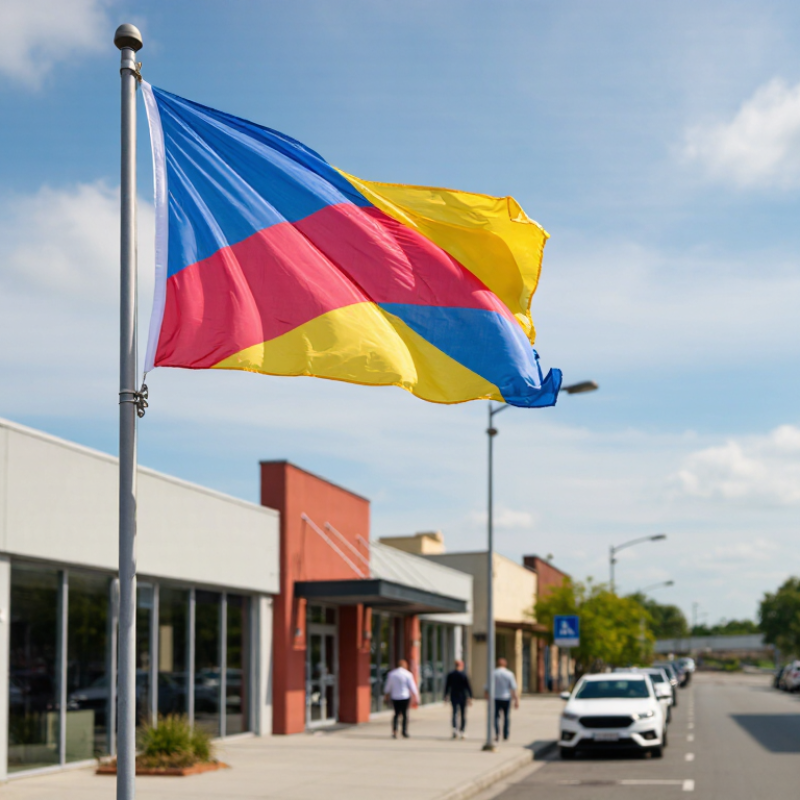
Why Choose an Advertising Flag Pole for Your Business?

What an Advertising Flag Pole Is and How It Works

Why Choose an Advertising Flag Pole for Your Business?

What an Advertising Flag Pole Is and How It Works

An advertising flag pole is a freestanding or mounted pole that holds a printed fabric flag above or beside a business. The flag may hang from a crossbar or stretch along a flexible pole, depending on its shape. Wind gives the fabric movement, while its height helps it stand out from nearby signs, parked cars, and storefronts. That motion matters. The Outdoor Advertising Association of America reported that U.S. out-of-home advertising revenue reached $9.1 billion in 2023, up 2.1% year over year. This figure covers the wider out-of-home sector, not flag poles specifically, but it shows businesses continue investing in visible, place-based advertising.

In practice, the pole, fabric, base, and location work as one display. A weighted base suits paved areas; a ground stake may suit soft ground. Choose a flag size people can read from the distance they approach, and use strong contrast with only a few words. Wind is not guaranteed. A flag can also look tired when fabric fades, seams fray, or the pole leans, so inspect it regularly. Small detail, big difference.

Tips: Check local wind exposure before choosing a base. Keep the flag clear of doors and walkways, and replace worn fabric promptly. Don’t assume bigger is always better; a readable message beats a crowded one.

How Flag Poles Increase Business Visibility

An advertising flag pole can make a business easier to notice before customers reach the door. Its height lifts a clear message above parked cars, low signs, and passing foot traffic. At a roadside shop, a bright flag may catch a driver’s eye sooner than a sign placed beside the entrance. That matters.

Visibility depends on placement, not just height. Set the pole where people can see it from their usual approach, while keeping it clear of trees, awnings, and other signs. Use strong contrast and a few readable words; detailed offers often disappear at a distance. Keep it simple. A brief message such as “Open Today” can be easier to understand than a list of services.

Check how the flag moves in the site’s typical wind and inspect its fabric, fastenings, and base regularly. A drooping or tangled flag draws attention for the wrong reason. There is a trade-off, too: a very tall pole may stand out, but it can feel oversized beside a small storefront. Walk or drive past the location at different times of day, then adjust the position if the message is blocked or hard to read. Visibility is practical, but never automatic.

Key Benefits for Different Business Settings

Why Choose an Advertising Flag Pole for Your Business?

Advertising flags help businesses become easier to spot from streets, parking lots, and crowded event spaces. Their movement catches the eye, while a short message—“Walk-ins welcome,” for example—can quickly direct nearby visitors. They suit cafés with sidewalk seating, dealerships with large forecourts, pop-up shops, and exhibition booths.

76%

A 2012 U.S. consumer survey of 1,000 adults found that 76% had entered a store they had never visited because of its signs. The survey covered signage broadly, not advertising flags specifically, so treat it as context rather than a promise of results. Placement still matters.

For different settings, choose a flag height that stays visible without blocking windows or pedestrian routes. A compact base can work on a smooth indoor floor; a weighted outdoor base is more practical on exposed pavement. Keep the design readable at a glance: one offer, strong contrast, and generous empty space. Results are not automatic. Wind, glare, and a busy storefront can weaken even a well-made display.

Tips: Set the flag near the direction customers approach from, and check it from across the street. Replace faded graphics promptly. For a fair comparison, track visits or enquiries before and after placement; weather and seasonal traffic can distort a short test.

How to Choose the Right Flag Pole and Flag

Choosing the right advertising flag pole starts with the site, not the flag design. Measure the available height and check for nearby signs, branches, and overhead wires. Measure the site first. A pole that looks tall in a catalogue may feel crowded beside a low entrance. For a pavement display, consider how people move around the base and whether the surface is level. On soft ground, a compatible ground spike may work; hard surfaces usually need a suitable weighted base. Follow the pole maker’s guidance for wind limits and take the flag down when conditions exceed them. No pole is immune to strong gusts.

Next, match the flag shape and dimensions to the pole’s advertised capacity. A flag that is too large can strain the fittings, while one that is too small may appear lost. Check how the flag attaches: a sleeve generally slides over the arm, while clips or eyelets use different fittings. Small details matter. Choose a durable, weather-appropriate fabric, and consider whether the printed message will remain readable from the main viewing direction. A common mistake is choosing a flag for color alone; test the wording at a distance, since fine text can disappear from across a parking area. I would also leave room for adjustment: the first placement may not be the best one, and even a slight shift can improve visibility.

Why Choose an Advertising Flag Pole for Your Business?

How to Choose the Right Flag Pole and Flag

Compare example rectangular flag sizes by their face area to help choose a flag that suits your display space. Areas are calculated by multiplying width by height; consider pole height, site conditions, and visibility when selecting a complete setup.

Installation, Care, and Long-Term Use

Why Choose an Advertising Flag Pole for Your Business? Installation, Care, and Long-Term Use

A flag pole works best when its location and footing suit the site. Check for buried utilities, overhead lines, and firm, well-drained ground before digging. Follow the pole maker’s foundation dimensions and local wind requirements; a shallow base can wobble or fail. The ASCE 7-22 standard bases wind design on location and exposure, so one generic wind rating may not fit every storefront. Keep the flag clear of branches and sign edges. Small obstructions can cause repeated fabric wear.

Long-term care is mostly routine. Inspect the halyard, clips, fasteners, and pole surface monthly, and after strong winds. Wash the flag gently when dirt builds up; let it dry fully before storage. NOAA recorded 28 U.S. weather and climate disasters causing at least $1 billion in damage each during 2023. That figure is a useful reminder to plan for severe weather, not a prediction for any one site. Lower or remove the flag when conditions exceed its rated limits. I would not assume a durable pole makes the fabric equally durable.

Tips: Keep a simple inspection log. Note frayed seams, corrosion, loose bolts, and dates of storms. Replace worn parts early; waiting can turn a small repair into a pole problem.